Why Does an Odd Number of Teams Make Rec League Scheduling So Much Harder?
Eleven teams instead of twelve seems like a small difference until you try to build the schedule. Here is what the odd team actually costs you and the workarounds that hurt the least.
The math: why one team always sits
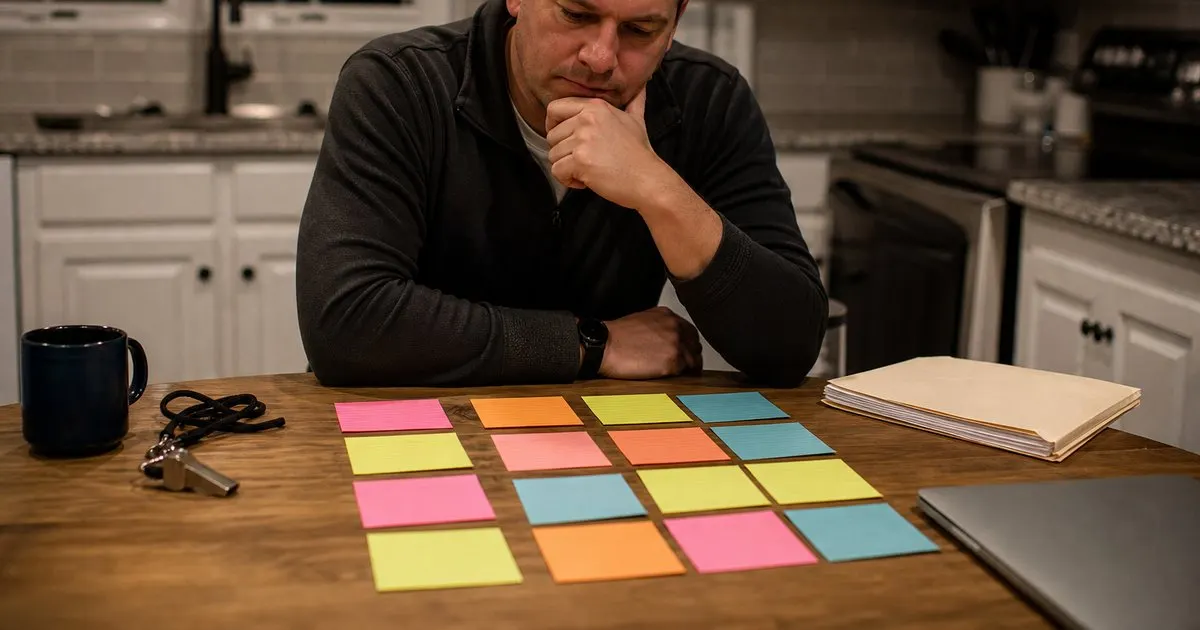
Games need two teams. With an even number of teams, every team can play every week and the schedule is a clean grid. With an odd number, one team sits out each week, no matter how clever you are. That idle week is a bye, and over a full round robin every team gets exactly one. The cost shows up immediately in the calendar: a round robin among twelve teams takes eleven weeks, but a round robin among eleven teams also takes eleven weeks, because each of the eleven rounds has one team on a bye. You get fewer games from the same number of weeks.
In a season shorter than a full round robin, the problem changes shape. With eleven teams and eight weeks, eight teams sit out once and three do not, which means some teams finish with eight games and others with seven. That unevenness is the real headache, because it flows into standings, time slot balance, and the sense of fairness that keeps players coming back. Related: Why Do Clear Standings Keep Recreational League Players Coming Back Each Week?
Keep reading: How Do You Build a Fair Schedule for a Recreational Sports League?, What Tiebreakers Should a Rec League Use to Decide Final Standings?, Why Do Clear Standings Keep Recreational League Players Coming Back Each Week?. See how LeagueLoopr helps you recreational sports league scheduling and standings.
The knock-on effects on standings and time slots
Unequal games played breaks any standings that rank teams by total wins or total points. A team with seven wins in eight games and a team with seven wins in seven games are not equal, and players will say so. The fix is to rank by winning percentage, with a published tiebreaker order behind it, and to show games played as its own column so the numbers explain themselves. If you use a points system, use points per game rather than total points.
Byes also distort time slot balance. The team on a bye that week did not take a late slot, so it drifts toward a lighter late-slot count unless you correct for it. And byes tend to clump at the end of the season if you build the schedule week by week, which leaves teams idle during the stretch when playoff seeding is being decided. Both problems are solvable, but only if you treat the bye as a slot to be distributed as deliberately as the late game, rather than as an accident. Related: How Do You Build a Fair Schedule for a Recreational Sports League?
Workarounds ranked by how much they cost you
The cheapest fix is to not have an odd number. Recruit one more team from your free agent pool, your wait list, or a team that folded last season and might return with a nudge. Failing that, borrow a team from another division or night that is willing to play up or down, or split into two divisions of uneven size with a crossover game so the team counts work out. Every one of these is easier to do in the two weeks before the schedule is built than at any point after.
If you are stuck with the odd number, decide what a bye means. The simplest choice is a week off, which players tolerate if it is announced early. A better choice, where field time allows, is to give the bye team the empty slot as a practice or open scrimmage against the bye team from another division. Some organizers pair the bye team against a ghost team and record nothing, which is just a bye with extra steps. The one thing not to do is give the bye team a forfeit win; it inflates records with games that never happened and undermines the standings for everyone. Related: What Tiebreakers Should a Rec League Use to Decide Final Standings?
Communicating byes so players do not feel cheated
Players accept a bye when they knew it was coming. Publish the bye weeks alongside the schedule, spread them through the season rather than stacking them at the start or end, and avoid giving any team a bye in the final regular-season week if you can help it, since that team then has no chance to affect its own seeding. If some teams get a bye and others do not because the season is shorter than the round robin, say that plainly and show the games played count in the standings so the arithmetic is visible.
When the standings are sorted by winning percentage and the games played column is right there, the odd team count stops being a fairness issue and becomes a fact of the season. Scheduling tools can handle the bye rotation automatically, spreading byes evenly and balancing slots around them; that is what ours does and what you should expect from any scheduler. The organizer's job is not to hide the bye but to make sure nobody has to wonder whether it was assigned fairly. Related: How Should Organizers Handle Rainouts and Rescheduled Games in a Rec League?
- With an odd team count, one team sits every round, so you get fewer games per week and unequal games played in short seasons.
- Rank standings by winning percentage and show games played so unequal schedules stay fair.
- The best fix is adding a team from free agents, the wait list, or another division before the schedule is built.
- Spread byes evenly across the season, announce them up front, and never award a forfeit win for a bye.

Julien Jimenez
Julien Jimenez is an independent software builder based in Paris. He designs, ships, and operates focused SaaS products for small businesses and independent professionals. Read the full author page.
Run your league without the spreadsheets
Recreational sports league scheduling and standings. LeagueLoopr is built to help you put this into practice.
Build my scheduleMore from the LeagueLoopr blog

How Do You Build a Fair Schedule for a Recreational Sports League?
What Tiebreakers Should a Rec League Use to Decide Final Standings?

Why Do Clear Standings Keep Recreational League Players Coming Back Each Week?
Get the LeagueLoopr playbook
Practical guides on rec league management, straight to your inbox as we publish them. No spam, unsubscribe any time.