What Should a League Organizer Do When a Referee Cancels on Game Day?
Officials cancel. It happens in every league, every season. The organizers who handle it well have a plan written down before the first whistle, not a panic at 6:45 in the evening.
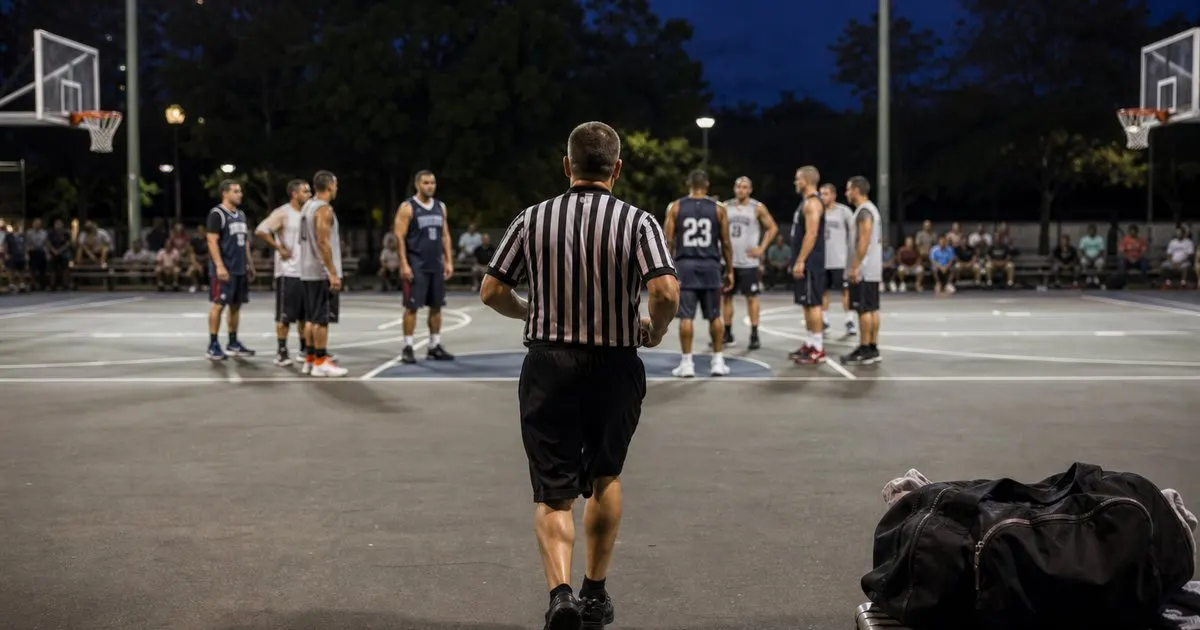
Build the backup list before the season, not on game night
The difference between a stressful referee cancellation and a manageable one is entirely about preparation. Before the first week, assemble a list of officials who have agreed to be on call, with their phone numbers, the nights they are available, and how much notice they need. Three or four names is usually enough for a league running one night a week. Ask your regular officials who they know; the officiating community in most towns is small and word of mouth works better than any posting. Related: Why Do Clear Standings Keep Recreational League Players Coming Back Each Week?
Consider paying a small standby fee to one official per night for being reachable, even if they never get called. It sounds like a waste until the first time it saves a game, and it makes the on-call arrangement a commitment rather than a hope. If your budget cannot stretch, ask experienced players from a different division whether they would officiate in a pinch for a game fee. Someone who plays in the Tuesday division and knows the rules can credibly officiate a Thursday game, and many enjoy it.
Keep reading: How Do You Build a Fair Schedule for a Recreational Sports League?, What Tiebreakers Should a Rec League Use to Decide Final Standings?, Why Do Clear Standings Keep Recreational League Players Coming Back Each Week?. See how LeagueLoopr helps you recreational sports league scheduling and standings.
The decision tree for the night of
When the cancellation text arrives, work a fixed sequence rather than improvising. First, call the on-call official. Second, if there is another game running at the same facility, ask that official to cover both by shifting one game's start time by fifteen minutes or by refereeing alternate halves; officials do this often and most will agree for an extra fee. Third, offer both captains a self-officiated game under your published honor rules. Fourth, and only if the captains decline, reschedule the game into a make-up slot.
Put time limits on each step. If the on-call official has not answered in ten minutes, move on. If the game is less than an hour away, skip straight to asking the captains. The point of the sequence is that you can execute it from your phone in a parking lot without having to think, and that you can tell the captains, honestly, that you tried the options in order. Captains will forgive a missing official; they do not forgive an organizer who had no plan. Related: How Can New Organizers Run Their First Rec League Without Burning Out?
Running a self-officiated game without chaos
Self-officiated games work in rec leagues more often than people expect, provided the ground rules are written in advance and both captains agree before the game starts. The rules should cover who makes calls (the player fouled, or the defending team on out-of-bounds, depending on the sport), how disputes are resolved (replay the point, no argument), who keeps time and score (a neutral person from the bench of either team, or the organizer), and whether the result counts in the standings. Most leagues count it, with a note. Related: How Should Organizers Handle Rainouts and Rescheduled Games in a Rec League?
Two protections matter. First, either captain can decline, and a decline should convert the game to a rescheduled make-up with no penalty to anyone. Second, suspend any sportsmanship-based penalties for that game, because without an official there is nobody neutral to assess them, and you do not want a self-officiated game to become a source of grievance. If you know two teams have a history, do not offer self-officiating to that pairing at all. Reschedule instead.
After the night: records, pay, and preventing repeats
Keep a simple reliability record for every official: assigned games, games worked, cancellations, and how much notice they gave. You are not building a case against anyone; you are learning who to schedule for the important nights and who to pair with a backup. An official who cancels once with a day's notice is fine. One who cancels three times an hour before tip-off should be replaced, and the record makes that a calm decision instead of an emotional one.
Prevention is mostly about communication. Send officials their assignments as early as you can, ideally for the whole season, and confirm each assignment two days before the game with a message that requires a reply. Pay promptly and at the rate you agreed to; officials talk to each other, and a league that pays late gets fewer of them. Finally, get to know whoever runs the local officials' association, if there is one. A relationship with the assignor is the most reliable backup plan there is. Related: What Is the Best Way to Communicate Game Changes to League Players?
- Build an on-call list of three or four officials before the season and consider a small standby fee to make it real.
- Work a fixed sequence on game night: on-call official, adjacent-game official covering both, self-officiated game, then reschedule.
- Self-officiated games need published honor rules, agreement from both captains, and no sportsmanship penalties.
- Track official reliability, confirm assignments two days out, and pay on time to keep officials coming back.

Julien Jimenez
Julien Jimenez is an independent software builder based in Paris. He designs, ships, and operates focused SaaS products for small businesses and independent professionals. Read the full author page.
Run your league without the spreadsheets
Recreational sports league scheduling and standings. LeagueLoopr is built to help you put this into practice.
Build my scheduleMore from the LeagueLoopr blog

How Do You Build a Fair Schedule for a Recreational Sports League?
What Tiebreakers Should a Rec League Use to Decide Final Standings?

Why Do Clear Standings Keep Recreational League Players Coming Back Each Week?
Get the LeagueLoopr playbook
Practical guides on rec league management, straight to your inbox as we publish them. No spam, unsubscribe any time.