How Do You Divide Limited Field Time Fairly Among Teams in a Rec League?
When you have three fields and fourteen teams, someone always ends up with the latest slot on the worst field. Here is how to distribute time slots so nobody feels singled out.
Why time slot fairness matters as much as opponent fairness
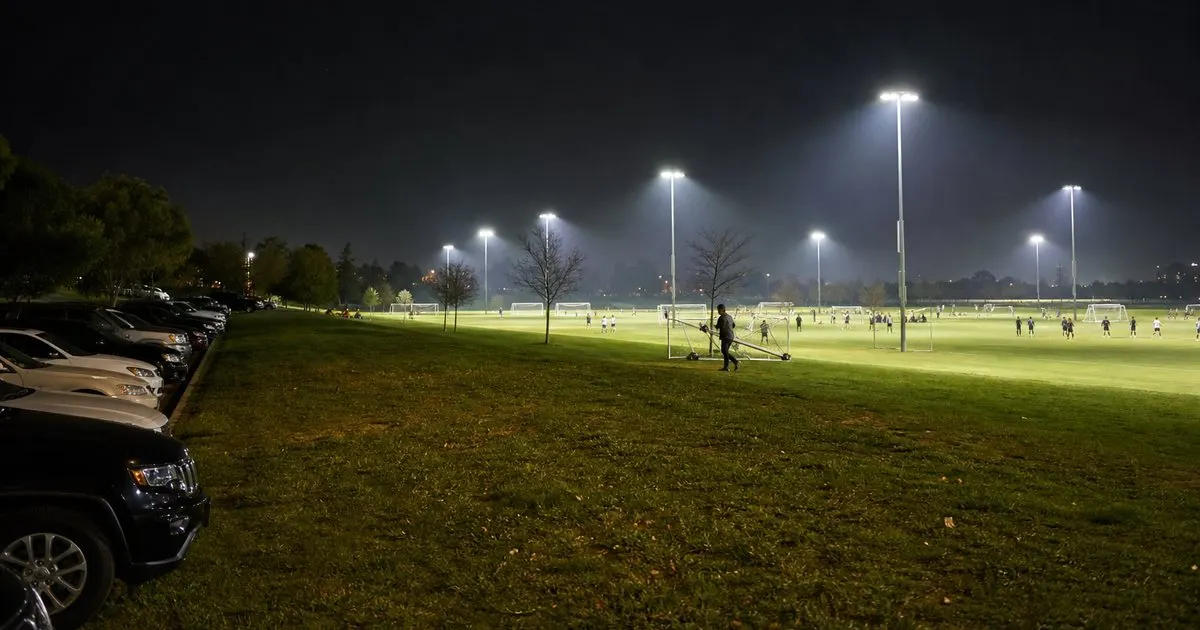
Organizers spend a lot of energy making sure every team plays every other team, and much less on who gets the late slot. Players notice the second thing more. A team that draws the last game of the night four weeks out of eight will assume you dislike them, whether or not that is true. The same goes for the field with the bad lighting, the court farthest from the parking lot, or the diamond with the sunset in the batter's eyes. These are not small grievances in a league where people are giving up an evening after work. Related: Why Do Clear Standings Keep Recreational League Players Coming Back Each Week?
Fairness here is really about distribution. Nobody expects to never play late. They expect to play late about as often as everyone else, and to be able to see that this is the case. Once the distribution is visible and roughly equal, the complaints stop. The rest of this article is about how to get there without spending your weekends shuffling index cards. Related: When Should a Rec League Lock Rosters and Stop Accepting Late Registrations?
Keep reading: How Do You Build a Fair Schedule for a Recreational Sports League?, What Tiebreakers Should a Rec League Use to Decide Final Standings?, Why Do Clear Standings Keep Recreational League Players Coming Back Each Week?. See how LeagueLoopr helps you recreational sports league scheduling and standings.
Count the slots and set targets before you build the schedule
Start by counting. If you have three fields and three time slots per night over eight weeks, you have seventy-two field slots for the season. With fourteen teams, seven games per week, you use twenty-one of those slots per week, and each team plays once. Now categorize the slots by desirability: early, middle, late, and by field. Each team should end the season with roughly the same number of late slots and roughly the same number of games on each field. With eight games per team and three time slots, the fair target is two or three late games each, never four or five. Related: Which League Formats Work Best for a Short Eight Week Season?
Set those targets before you assign a single game, because it is far easier to build to a target than to fix a lopsided schedule afterward. A rotation approach works: for each week, assign the late slots to the teams with the fewest late games so far, and break ties by field history. You will not hit perfect equality with odd numbers, but you can keep every team within one game of every other team, and that is enough for players to see it as fair. Related: How Do You Build a Fair Schedule for a Recreational Sports League?
Handling constraints and requests honestly
Captains will ask for things. Some cannot play before seven because of work; some coach their kids on the early slot; some have a player on night shift. Accommodating a few of these is good customer service, but every accommodation shifts the late slots onto someone else. So make requests a published process with a deadline before the schedule is built, rather than a favor granted by text message. State what you can accommodate (a weekly earliest start time, one blackout date) and what you cannot (a specific slot every week).
Then track what you give. A team that got its preferred time all season has a debt in the fairness ledger, and it should carry the extra late slot next time there is a choice. Never honor an unpublished request, because the moment another captain finds out, every other accommodation you made looks suspicious. When two constraints conflict and something has to give, favor the constraint that affects more players or was submitted earlier, and say so.
Making the distribution visible
The best defense against a fairness complaint is a table. When you publish the schedule, publish alongside it a simple count per team: number of early, middle, and late games, and number of games on each field. Players who can see that their team has three late games and everyone else has two or three will not complain. Players who cannot see the table will assume the worst. This is a case where transparency does the work that persuasion cannot.
Scheduling software can produce that tally automatically, and some tools, including ours, will balance time slots as part of building the schedule rather than as an afterthought. Whatever you use, accept that with odd team counts or uneven field quality the distribution will not be perfect. Explain the trade-off in one sentence when you publish, and at the end of the season, check the actual totals against the plan, because rainouts and reschedules quietly unbalance everything. Fix it in the following season's rotation.
- Players notice late slots and bad fields more than opponent balance, so distribute those as deliberately as matchups.
- Count total slots, set a per-team target for late games and each field, and build to that target rather than fixing it later.
- Take captain constraints only through a published process with a deadline, and track who has been accommodated.
- Publish a per-team slot tally with the schedule so fairness is visible, and recheck it at season end.

Julien Jimenez
Julien Jimenez is an independent software builder based in Paris. He designs, ships, and operates focused SaaS products for small businesses and independent professionals. Read the full author page.
Run your league without the spreadsheets
Recreational sports league scheduling and standings. LeagueLoopr is built to help you put this into practice.
Build my scheduleMore from the LeagueLoopr blog

How Do You Build a Fair Schedule for a Recreational Sports League?
What Tiebreakers Should a Rec League Use to Decide Final Standings?

Why Do Clear Standings Keep Recreational League Players Coming Back Each Week?
Get the LeagueLoopr playbook
Practical guides on rec league management, straight to your inbox as we publish them. No spam, unsubscribe any time.